Metal,
Not Magic.

Susi O'Neill on women's AI adoption and the four principles for an inclusive rollout that lifts the whole workforce.

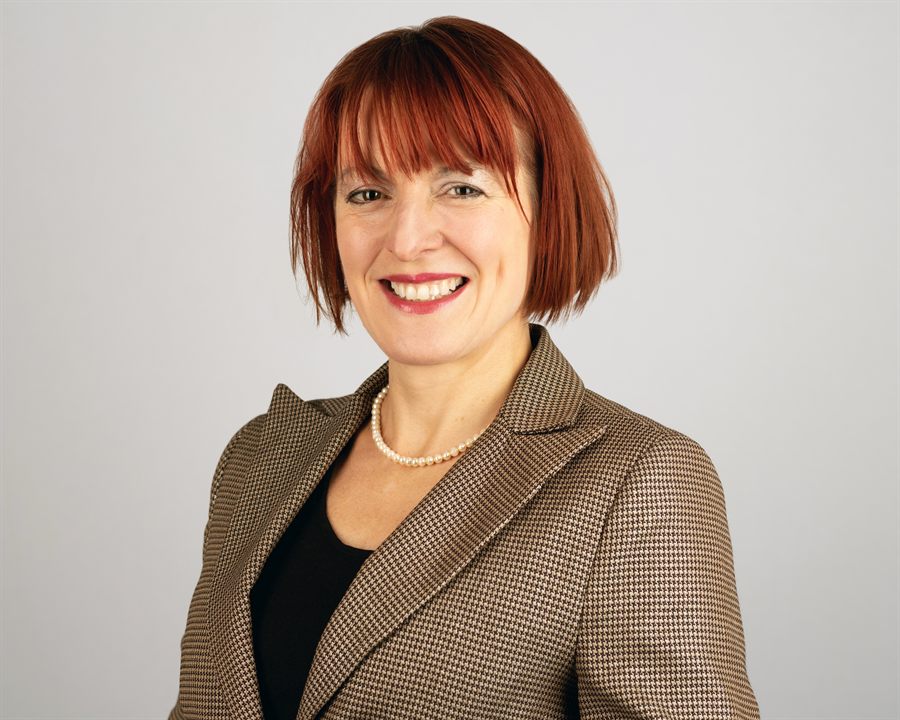
Susi O'Neill · Founder, EVA Digital · London
Susi O'Neill
Susi O'Neill
She Leads AI Social Saturday Speaker — May 2026 Founder, EVA Digital · Host, Insight Story Podcast · Writes Rethinking the Hype Cycle
Did Susi's framework give you new language for a conversation you needed to have?
Leave Susi a Testimonial →
01The Anchor Story

Her Book Got Canceled

Susi O'Neill wrote a book about inclusive AI for a UK publisher.

She had years of research and a contract. Then the political climate in the United States shifted and the publisher came back with a request — change the title, soften the framing. Susi said no. Her book was canceled.

What you might do at that point is shelve the project.

What Susi did was take the entire book — the research and the resource pack — and release it for free. Anyone who scans her QR code receives the deck and a bundle of materials they can use in their own work.

The Social Saturday session on May 9, 2026 was the first time she had ever delivered this talk publicly. She came out of the chute with a keynote that holds together as a single argument and ends with a menu of commitments she asked the audience to choose from.

It's not a revolution if AI leaves half the workforce behind.

Her book got canceled. The argument did not.

She showed up at Social Saturday with that line as the anchor of the whole project and led us through what it means and what an inclusive AI rollout looks like in practice. The She Leads AI community came away with a free toolkit and a sharper way to talk about AI at work.

02Why It Works

Who Is Being Left Behind

There is a story circulating in the boardroom that AI adoption is following a normal technology curve and the laggards will eventually catch up. Susi sees something different.

Generative AI is foundational. It behaves differently than the data-led and structural technologies that came before it. It reshapes how value is created and how careers develop. Whether you welcome it or not, the shift is already underway. Lagging at the early-adoption stage compounds.

So the question is — who is being left behind, and why?

The data Susi compiled across her annual International Women's Day research tells a consistent story. Women at work are about 25% less likely than men to use AI, per Harvard Business Review. Workers over 50 are less likely to engage. The Edelman Trust Barometer shows trust in AI and AI companies dropping fast, with the steepest declines among women and older workers in Europe and North America.

Only about half of all workers receive any formal AI training. The half that does shows exponential capability growth. The half that doesn't is being told to manage it on their own.

The skills gap is the surface. Underneath sits an eroded trust crisis and a rationed training pipeline, with historic bias the algorithms now reproduce at scale.

Two points from her data carry the argument —

Women in equivalent senior-leadership positions are still about 16% less likely to use AI than men in the same roles. Genevieve Smith and her husband had matching age and matching income — but her credit limit came in lower because gender was the only factor.

The future is already here, it's just not evenly distributed. — William Gibson

He could have been talking about AI adoption. The further away you are from being a Silicon Valley bro, the less likely you are to experience the benefits.

03Where the Gap Opens

The Biggest Gaps

Susi's framework identifies the places where AI adoption goes sideways for women and other underrepresented groups. Each is a place where a leader or a team can intervene.

Education

Men in the US and Canada are about four times more likely than women to earn a tech degree. Roughly one in five women have higher education in computer science. In Susi's school visits, eight- and nine-year-old girls are open to tech careers. By age ten to twelve, they have already absorbed that tech is a "boys' thing." Influence early.

Workplace Reality

About one in five people working in AI roles are women. The number drops further for researchers and software developers.

The Revolving Door

Attrition runs higher for women in AI than for men. Seventy percent of women report working at a tech company where bro culture dominates. The pandemic widened tech-industry inequalities.

Algorithmic Injustice

Bias is rarely intentional. It seeps in through proxies — zip codes that map to ethnicity, life events that map to gender. Untested algorithms carry historic bias forward. In AI, the past is the future, because the model is living off legacy data.

Image and Imagination

Generative AI defaults to a middle-aged white man in a navy suit when asked for a tech-conference speaker. The same pattern shows up across requests — the wheelchair user looks depressed, the low-income community looks like dumpster-divers. The diversity has to be prompted in every time, until the patterns shift.

Automation Threat

Tasks are not jobs, but women hold a disproportionate share of administrative roles in the highest-exposure categories. Men cluster in lower-exposure roles like construction. Over the next five to ten years, more women than men are at risk of losing work to automation.

AI at Work

Women are less likely to adopt AI at work — and even at equivalent senior-leadership positions, they are about 16% less likely to use it than men in the same roles. Hallucination and quality concerns drive legitimate skepticism. Women need patience and support to settle into the journey on their own terms.

Intersectional Challenges

Women of color earn less than white women. Women with disabilities face worse digital access. Rural women and women over fifty are the least likely group to use AI. Existing gaps around gender and age get wider as AI spreads.

04The Framework

Four Principles for Inclusive AI

Susi's argument turns at the line AI is metal, not magic. Inclusive AI is small wins measured over time, with training and psychological safety to make them stick. Her framework defines four principles for leaders rolling out AI programs that lift the whole workforce.

01

Design for Difference From the Start

Never one-size-fits-all training. Different roles need different tools, and different workflows have different automation patterns already embedded. Map the training program to the workflows your team is doing today.

02

Measure What Improves

Token-maxing — the practice of bragging about how many tokens your team is burning — is an inefficiency measure dressed up as a productivity measure. Better measures look at faster delivery and happier teams. Track sentiment alongside throughput.

03

Psychological Safety First

Participation runs ahead of adoption. Pressuring people to adopt AI on a deadline collapses trust. Making it safe to experiment and learn together builds capacity. The framing carries weight — call it augmentation, and the team stays. Call it automation, and they pull away. The savvy organization does 20% more with the team it has when AI delivers a 20% efficiency gain.

04

Take Stewardship

AI is shaping the working world whether we welcome it or not. The question is whether it creates opportunity for the whole workforce or new privilege for the few. That is a leadership choice. The technology follows the leader. AI fluency takes about twenty hours of training to reach a meaningful threshold, and people who reach it gain back roughly ten hours a week. Get that training to the people who have been left out.

05From the Room

Community Voices

Anna-Marie
If we can address this just for women as the group we're looking at, it changes things for almost every other group. When people realize, oh my goodness, we've left out half of the world, it has a bigger impact than when we say this isn't reaching non-English speakers or people with disabilities. They are able to minimize a smaller number, but it's hard to minimize when it's more than fifty percent. The book I would tell everybody on this call to consider with their whole hearts is Invisible Women by Caroline Perez.
Chris
It's a trust thing and a change-management thing rolled into one. What corporations miss for technology — and this one is on steroids — is the social license to operate. They worry about getting the patents and the licenses to put in their data centers. They don't worry about people on the street, people in the communities, people worried about all the things you talked about. Women are good at building social license. It's not a tech change. It's a cultural change.
Lore · Grenoble, France
AI companionship is assistive technology for ADHD users. Once AI is considered assistive technology, the governance and ethics change — companies cannot just change the model on us and leave us to deal with the aftermath and try to rebuild our wheelchairs.
Audrey
We have a cohort that's part of the Governance Community of Practice specifically on algorithmic bias. We're working on identifying where bias shows up in AI and giving people a toolkit they can use — whether they are individuals, educators, or advocating for nonprofits. We are presenting in June.
06Resources Shared

From the Chat

Susi's Resources Shared During the Session

  • Rethinking the Hype Cycle — Susi's newsletter
  • Insight Story podcast — Susi's earlier interview project on quantum and ethical AI
  • EVA Digital — Susi's communication and inclusion practice
  • The free open-source talk + resource bundle

Also Mentioned by Susi

  • Invisible Women by Caroline Criado Perez
  • Jane Evans (UK) — retired creative director, art-directs older women in AI imagery
  • Cindy Gallop — led the original LinkedIn algorithm-bias-against-women research
  • Zoe Scarman — writer on women's instinctive caution around AI as a feature
  • William Gibson — "The future is already here. It's just not evenly distributed."
  • Edelman Trust Barometer
  • Andrej Karpathy — feels behind. Everyone feels behind. The pace anxiety is partly fabricated.

Also Mentioned by the Community

  • NICO Project — Sonia from the AI Salon won the Women Build AI Buildathon with this project, built on 1:1
  • She Leads AI Algorithmic Bias Cohort — Audrey and Carmela presenting in June
  • Noemi Reyes Learn Out Loud Part 2 — AI Salon session on building and shipping apps with Antigravity
  • Daily AI Show — Beth Lyons co-hosts, weekday mornings
  • Marcia Narine Weldon and Trudy-Ann Armand are at the Human+Tech conference in San Francisco, May 10–14.
Susi O'Neill
Speaker Bio

Susi O'Neill is the founder of EVA Digital, helping teams communicate clearly about technology and inclusion in AI. She hosts the Insight Story podcast and writes the Rethinking the Hype Cycle newsletter, where she translates AI hype into something digestible for business audiences. She has been recognized among the top 50 women shaping content strategy. Susi has been working in digital since the start of this century, leading content programs and now advising on the human side of AI adoption. She lives in London near Notting Hill.

She Leads AI Social Saturday Speaker — May 2026
Anne Murphy
About the Author
Anne Murphy

Anne Murphy is the founder of She Leads AI and a leading AI operations consultant specializing in governance, education, and responsible adoption. She is currently building the world's first matriarchal agentic company and is co-founder of a stealth start-up to be announced soon.

With 33 years raising hundreds of millions for STEM education and research, she also consults through Empowered Fundraiser Consulting. Proud mom of three, backpacker, Midwest roots, Pacific Northwest energy.

These companion guides are produced by Anne with her agentic leadership team.

Programs Gather With Us AI Academy
Society members make this free for all women.
Gather With Us →