Uncover Your
Authentic Story
The neuroscience of why stories move people, a five-beat structure that works for any audience, and a live NotebookLM exercise that audits the gap between who you are and how you show up online.
Why Stories Work (And Why Most People Aren't Telling Them)
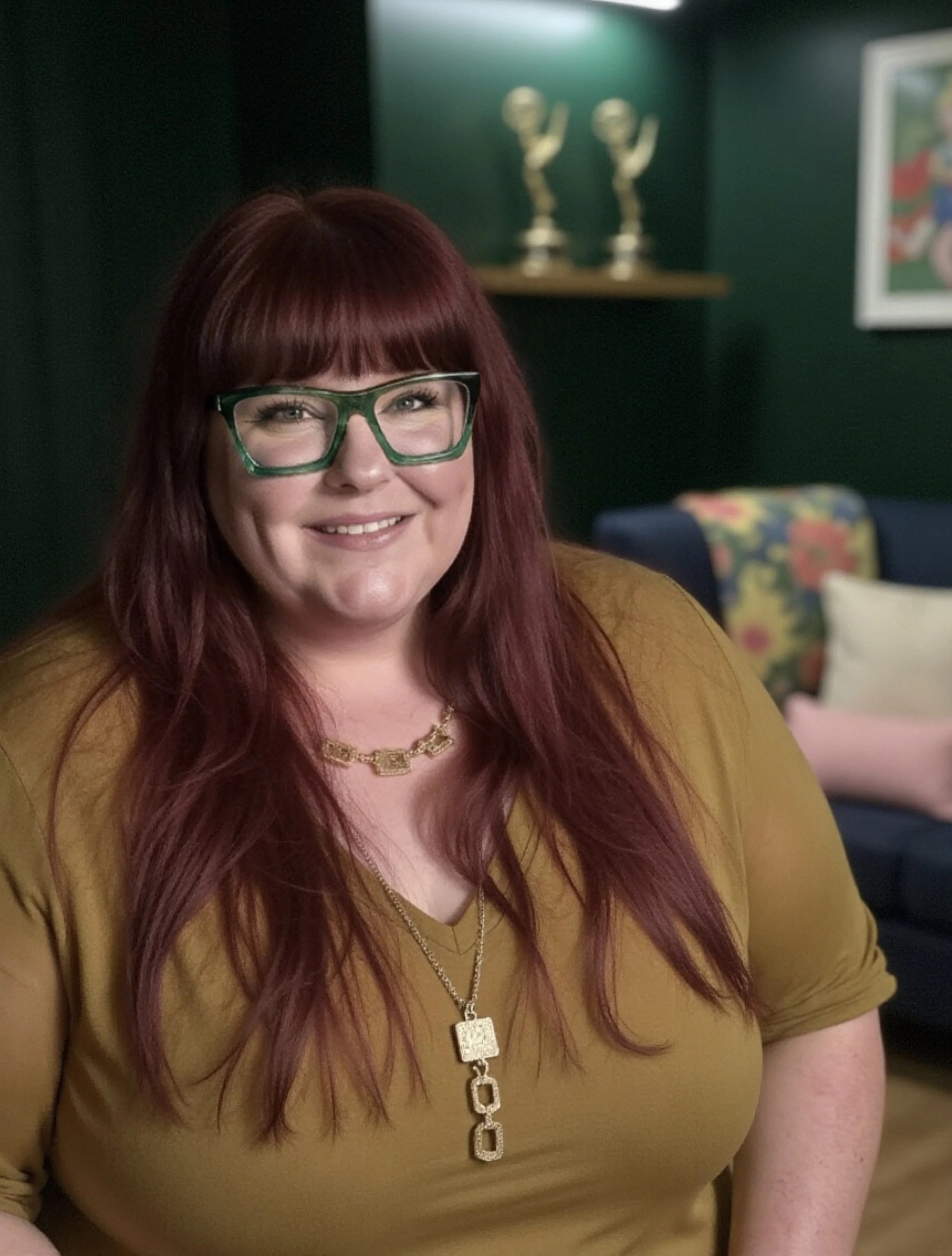
Erica spent years as a Creative Predator at WCCO-CBS Minneapolis — producer, writer, director, shooter, and editor, all at once. She founded Puke Rainbows to help individuals and brands find the story underneath their polished professional copy. Her accountant told her it was the worst business name she'd ever heard. Erica kept it.
Erica Hanna is a six-time Emmy Award-winning filmmaker and storytelling strategist. She spent years as a Creative Predator at WCCO-CBS in Minneapolis — producer, writer, director, shooter, editor. She founded Puke Rainbows (intentionally). Her accountant said it was the worst name ever. She kept it.
She opened by drawing a line between three things most people confuse.
A Sales Pitch — Persuasive. Polished. The thing that comes out of every branding workshop. Designed to close, not to connect.
A Story — A slice in time. A specific moment that happened, told through sensory detail, that reveals who you are and why you do what you do.
If you think you're telling a story, but your competitor could put their logo on it — it's the wrong story.
Erica Hanna · Social Saturday, April 11, 2026The Neuroscience Behind It
Facts activate two areas of the brain. Stories activate the entire brain — including the motor cortex, auditory cortex, and sensory processing areas. The more regions engaged, the longer someone remembers you.
- Oxytocin rises approximately 50% during storytelling — producing trust
- You are 65% more likely to win someone's business after a story than after a pitch
- You are 92% more likely to be remembered one week later
Erica's test for sensory detail: "If I said I worked with a really great musician, that's a statement of fact. If I said I nearly threw up on Prince and was shaking in fear — that's a story. Your body goes: I know what that feeling is."
Jargon is where authenticity goes to die.
Erica HannaThe Five-Beat Story Structure
Erica sources her structure from Nancy Duterte's TED Talk — approximately 15 years old, and what she calls "chef's kiss." She credits it explicitly. This is not her formula. She has just been applying it across thousands of clients and stories.
The structure works for a job interview, a pitch, a LinkedIn about section, a speaking bio, a fundraising ask, or a product page. Same bones every time.
Find your Dukes. Erica filmed a law firm and asked their people what made the culture special. The perfect answer came from Duke — a 75-year-old elevator operator who had worked there for 40 years. "It's one thing to say we're a family. It's another to say Duke has worked here 40 years and he still shows up." Find the specific, unusual, real characters who show rather than tell who you are.
Who are you to deprive other people of your experience? You don't get to make that decision for me — whether I'm sick of your story or not.
Erica Hanna — on telling the same story again and againThe Prince Story
Erica's anchor example — the story she uses to demonstrate everything she teaches.
At the time, Erica had four Emmy Awards and imposter syndrome so severe she called herself "a creative gremlin who sat alone in a dark room all day." A producer she knew called on short notice to invite her to direct a shoot at Paisley Park — Prince's estate in Chanhassen — that night. She almost said no. He convinced her by saying Prince probably wouldn't even show up.
Phones confiscated at the door. No WiFi. She spent hours blocking shots with the band.
Around 1am, frustrated with how a camera angle was set up, she took the camera from her camera operator to show him what she meant. When she stood up: Prince was standing behind her. Satin pants — one white leg, one black leg. Platform shoes. Hair in a fro. Velvet smoking jacket.
Instant sweat. The pre-puke acid coming at my throat.
Erica HannaShe showed him the footage. He shook his head no. Then he looked at the other producer and said: "I thought you said she produces video." Then he turned to Erica: "From now on, I want you to understand — you shouldn't tell people that you create video. Because this is art. So from now on, I need you to tell people that you create art." He wrapped one arm around her and whispered: "You want to create something the world's never seen before."
The footage is still locked in the Paisley Park vault. He died before the project was finished.
I truly believe when Prince told me that I make art — that everything is art — if you can do spreadsheets, I do not understand your brain, and that is art to me. Anything you do can be art. So be lovely artists out there.
Erica HannaWhy this story works: It hits every beat of the structure. What Is (imposter syndrome despite 4 Emmys). What Could Be (the shoot going well). Hurdle (Prince appears unexpectedly). Solution (she stands her ground and shows him the footage). Triumph (Prince names her work as art). And it has sensory detail — the satin pants, the platform shoes, the acid in her throat — that makes you feel like you were there.
The NotebookLM Exercise
Erica walked the room through a live exercise using Google's NotebookLM to surface the gap between your authentic voice and your professional persona. Here is the full six-step process, exactly as she ran it.
Answer three questions in stream-of-consciousness — no editing, no polish. Voice memo or typed, your choice. Erica recommended dictation: "We speak differently than we write."
Question 1: What do you actually do every day, described as if talking over wine with a friend?
Question 2: What's the thing about your work that lights you up — something you would never put on a resume?
Question 3: A specific moment at work where you thought: this is why I do this.
The instruction: "Ramble. Ramble is the point, because that's when you get authentic."
Go to your LinkedIn profile → click the three dots (or Resources, or More — it differs by account) → Save to PDF. Also pull your website about page URL or paste your bio into a separate document. Keep this completely separate from the personal ramble. Optional: YouTube links, workshop recordings, a professional bio sent via email.
Go to notebooklm.google.com (free, requires Gmail login). Click "New Notebook." On the left sidebar: "Add Sources." Upload your personal ramble document and your LinkedIn PDF. Add your website URL or paste the text. These are now the two lenses the tool will use to find the gap.
In the Audio Overview section, click the pencil/edit icon — not just the generate button. Switch the format from "Deep Dive" to "Debate." Use this exact custom prompt:
Set length to Short. Generate. Takes approximately 5 minutes. Erica's note: "This is just meant for perspective. I don't want you to look at this as, oh my gosh, I failed. It's literally just to hear other people talk about you in different ways."
In the NotebookLM chat box, run these while you wait:
Audit for performative language
That third prompt is the conditioning tool — it trains you to recognize the difference on your own going forward.
NotebookLM gets more useful as you add more. Voice memo a great client interaction — add it. Get a testimonial — add it. After a speaking event, add the transcript. Erica's current notebook is years of stories, updated continuously. The more authentic material you feed it, the sharper the contrast it can draw against your polished professional copy.
Three Prompts You Can Use Right Now
These work in any AI tool. Claude, ChatGPT, Gemini — the goal is the same: find the story underneath the summary you've been telling.
Community Voices
LinkedIn →
LinkedIn →
Anne also mentioned from the CREATE 2026 speaker review: "The submissions surviving each cut are the ones where we know what their point of view is — the ones where there's language that comes from the person. The vanillified ones are really, really hard for us to move forward." Stories with a point of view aren't just better. They're what gets you selected.
From the Chat
The chat was its own session. Here's what the room was actually saying while the exercise was running.
What the AI Actually Said
Participants shared their NotebookLM results live. These are real outputs, unedited.
Your branding is essentially "Eat, Pray, Love" but with more rock climbing gear. You tell your clients to stop "performing" their lives, yet your professional copy is a high-performance performance. You market yourself with the "unbending intent" of a movie protagonist, promising to hand people a machete, a match, and a map just to help them navigate a mid-life crisis.
NotebookLM — roasting Marta's brand copyI was standing at the Melbourne airport, unable to lift my own bags and hollowed out by a parasite that had vacuumed the will right out of my body. My marriage was over, my back had been broken, and for the first time in my life, I couldn't find myself on a map. It took a friend gripping my shoulders and naming the truth I was too proud to see — that I was empty — to finally make me realize I was meant for something deeper than just surviving the next climb.
Marta's authentic story hook — generated from her NotebookLM sourcesThe Room Reacting
Resources Shared in the Chat
Deborah A. raised the question of the hour: "I'm curious if / how Duke was ever compensated in a way that mattered to him for his contribution to representing the 'culture' of the company." Erica's response: "Typically folks volunteer for these things... but in the future I might suggest a half day of PTO, to offset the extra emotional labor." Deborah came back: "To be clear, it's not about emotional labor" — meaning: he gets to decide what fair looks like. Erica: "Yes, that autonomy is important."
Take It With You
The foundational question from this session — use it any time you're about to tell someone what you do.
"Is this a summary? A pitch? Or a story?"
Gather With Us Every Saturday
Social Saturday runs weekly, 10am–noon Pacific. Each session brings a featured practitioner, live application, and a room full of women already doing the work.
Gather With Us →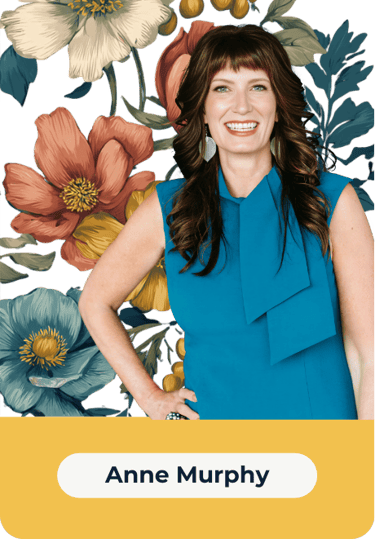
Anne Murphy hosts Social Saturday and leads She Leads AI — an AI education community for women leaders and entrepreneurs. 15+ years in higher education fundraising. She found Erica through the algorithm "making content blowing my mind about how stories change the way we think, feel, and do things."
Companion guide compiled from the April 11, 2026 session transcript.